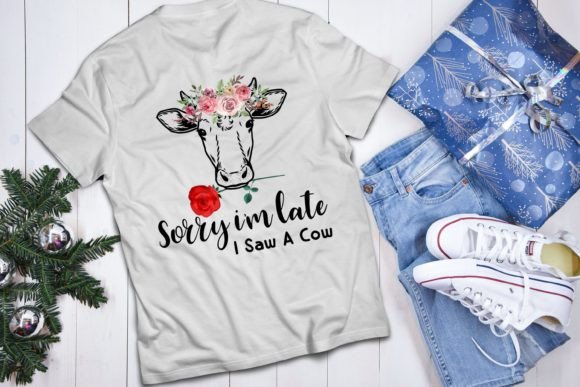
Sorry I m Late I Saw a Cow Funny T Shirt
When you first open the file for Sorry I m Late I Saw a Cow Funny T Shirt, the immediate reaction is one of playful recognition. As someone who has spent years evaluating embroidery designs for everything from boutique branding to personalized gifts, I look past the novelty to see the structural integrity of the work. This design doesn't just sit there; it demands attention with its bold typography and clear narrative. It feels like a piece that belongs in a farm-to-table kitchen or on the back of a denim jacket worn by someone who appreciates a good pun.
The visual personality of this design is undeniably lighthearted. The layout prioritizes readability, which is crucial when translating a digital graphic into physical thread. Unlike some trendy fonts that sacrifice legibility for style, this typography maintains a clean structure that suggests it will hold up well under the pressure of a machine needle. For an embroidery designer looking to create a finished product that customers will actually wear, clarity is king. This design delivers that promise immediately.
Real-World Application: From Screen to Stitch
Imagine you are preparing for a local craft fair next weekend. You have a stack of tote bags and sweatshirts ready, but they lack a unique selling point. You decide to test Sorry I m Late I Saw a Cow Funny T Shirt on a dark-colored canvas tote bag. The potential here is significant because the description notes that color changes are possible for dark fabrics. In my experience, many cow-themed designs fail on dark backgrounds because the contrast washes out, making the text look muddy. However, this design seems built with the flexibility to adapt.
Picture the final result: a sturdy canvas tote with the phrase stitched in a bright, contrasting thread against the deep navy background. When a customer picks it up at a market stall, the humor lands instantly. It isn't just a generic animal print; it tells a story. That narrative connection is what drives sales in the handmade sector. Whether you are an Etsy seller looking to boost your shop's visibility or a small business owner creating merchandise for a local event, this design offers that "stop-and-smile" factor that converts browsers into buyers.
I also envision this design on a baby onesie or a nursery pillow cover. The theme is gentle enough for a child's room yet funny enough to make parents laugh. The simplicity of the message allows it to fit seamlessly into a collection of nursery decor without feeling out of place. It transforms a standard garment into a keepsake, adding value to a simple embroidery project. When you stitch this onto a soft cotton onesie, the tactile quality of the thread adds a layer of sophistication that mass-produced items simply cannot match.
Navigating Technical Challenges
While the concept is strong, every experienced designer knows that the devil is in the details. Before committing this design to a client order, you must consider where it might struggle. If you plan to use this on a curved surface like a baseball cap, the curvature can distort the lettering. A design that looks perfect flat on a screen might stretch awkwardly around the crown of a hat. I would advise testing the hoop size carefully to ensure the curve matches the natural arch of the fabric.
Texture is another critical factor. Embroidering on a heavily textured fabric, such as a thick fleece or a rough burlap, can hide the finer details of the stitching. If the design relies on tight spacing between letters, a thick fabric might cause the threads to bunch up, leading to puckering. Similarly, if you are working with thin or stretchy fabrics like jersey knit, you need to be vigilant about your stabilizer choice. Without adequate support, the tension of the stitches could warp the fabric, ruining the drape of the shirt.
Dense stitch areas are also worth noting. While the design appears straightforward, fill stitches can sometimes become too heavy, especially on lighter garments. If the density is too high, the fabric may feel stiff and uncomfortable. It is essential to check the stitch density settings in your software before running the machine. Adjusting the density slightly can make the difference between a professional finish and a clunky, over-stitched mess.
Design Assets for Commercial Success
For those of you building a craft business or managing a small shop product line, understanding the versatility of this design is key. It works exceptionally well as a standalone element on a tote bag design or as a focal point on a sweatshirt embroidery project. The humor translates well across different mediums, from kitchen towels to aprons. When you sell a finished product, the quality of the embroidery reflects directly on your brand consistency. A sloppy execution can erode customer trust, whereas a crisp, clean stitch job reinforces your reputation for professionalism.
If you are creating printable mockups for your listings, ensure the digital preview accurately represents how the thread interacts with the fabric. Customers want to see the texture of the stitches, not just a flat image. By showing the depth and dimension of the machine embroidery design, you help them visualize the finished product more realistically. This transparency reduces returns and increases buyer engagement.
Practical Designer Notes for Execution
Before you start stitching, there are a few non-negotiable steps to ensure success. First, always test the design on scrap fabric that matches the weight and texture of your final material. This simple step saves time and prevents wasted materials. Second, review your thread colors closely. Since the design is optimized for dark t-shirts, ensure your light thread choices provide maximum contrast. A gray thread on black might look dull, while a bright white or yellow will pop.
Inspect the small details of the letters. Sometimes, fine lines can break up during the digitizing process, resulting in gaps in the text. Run the design through a black and white mockup to check for any potential issues with negative space. Additionally, confirm whether the license allows for commercial use if you intend to sell the finished items. Many designers overlook this detail until after production begins.
Finally, consider the washing instructions. If the design includes dense satin stitches, it might require special care to maintain its shape over time. Educate your customers on how to wash their personalized gift to ensure longevity. By paying attention to these technical nuances, you elevate the perceived value of the item. It shows that you care about the quality of the embroidery file and the end-user experience.
In conclusion, Sorry I m Late I Saw a Cow Funny T Shirt is more than just a novelty graphic; it is a versatile tool for creative entrepreneurs. With careful planning and attention to the technical aspects of commercial embroidery, this design can become a staple in your catalog. Whether you are crafting a unique holiday gift or launching a new line of apparel, this piece offers the perfect blend of humor and craftsmanship.